
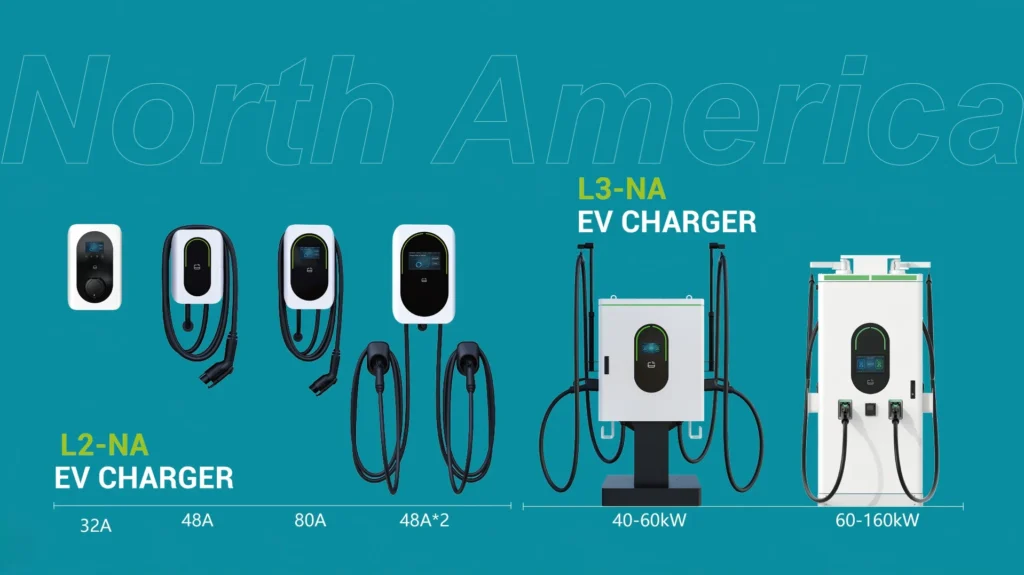
Type “EV charger manufacturer” into Google and you’ll see hundreds of companies: “reliable quality,” “competitive pricing,” “global shipping,” and “OEM/ODM available.” The products in the photos are often the same model from the same factory, relabeled for different buyers. You can’t tell one from another. The buyers are confused, so they default to the lowest quote.
This is the commodity trap — and most new EV charger brands fall right into it within 18 months. Not because the product is bad. Because they never defined what made them worth choosing over anyone else.
Brand positioning answers just one question:
Why should a specific buyer choose you over someone else? Not “why is our charger good?” Good is not enough, it’s just table stakes.
This guide shows you how to build an EV charger brand position that’s actually defensible — not just a tagline, but a strategic choice about who you serve, what you’re best at, and what you’re willing to say no to.
This page is part of our Private Label EV Charger Complete Guide. If you haven’t yet decided on your brand model (white label, ODM, or OEM), start with our white label vs ODM vs OEM comparison before working on positioning.
Why Do Most EV Charger Brands Look Exactly the Same?
The most common positioning mistake is defining yourself relative to the category — not relative to a specific buyer.
When a brand says “reliable, certified, competitively priced EV chargers,” they’re describing the category minimum — not a position. Every credible manufacturer can make the same claim. These attributes don’t create separation; they just confirm you’re in the race.
Real differentiation means something concrete is true about your brand that is not equally true about your nearest competitors — and that the specific buyers you’re targeting care about. It’s not a marketing exercise. It’s a business strategy decision about where to focus and what to be genuinely better at.
In the EV charger market specifically, three structural factors make differentiation both harder and more important than buyers expect:
Hardware convergence
Most AC and DC charger hardware comes from a small number of manufacturing platforms. Without brand-level differentiation, buyers can’t tell your product from the one sitting next to it on Alibaba.
Certification parity
CE and ETL are now table stakes in most markets. Having them doesn’t differentiate you — not having them disqualifies you.
Buyer sophistication is rising
CPOs, fleet managers, and procurement teams in 2026 have been through multiple EV charger purchase cycles. They’ve been burned by suppliers who overpromised. They’re looking for specific proof, not general claims.
4 Ways to Position Your EV Charger Brand,and Which One Fits You
There are four strategic dimensions along which an EV charger brand can build a defensible position. You don’t need all four. Most strong brands own one clearly and are credible in a second.
Way 1 — Buyer Segment
Who specifically do you serve — and how deeply do you understand their world?
The EV charger market has multiple distinct buyer types with fundamentally different priorities. A CPO building a public network needs OCPP 2.0.1, an uptime SLA, remote diagnostics, and NEVI compliance. A fleet operator needs depot planning support, load management, and integration with their fleet management software. A hotel needs aesthetic design, easy payment, and a solution that doesn’t require dedicated IT staff to manage. These buyers don’t want a generic charger — they want a brand that has clearly thought about their specific problem.
Positioning by segment works when you have deep knowledge of one buyer type, can build features and content specifically for them, and the segment is large enough to sustain your business.
Way 2 — Geography
Which markets do you serve — and do you hold the certifications and local knowledge to serve them properly?
Geographic positioning is one of the most underused strategies in EV charging. A brand that holds ETL certification, understands NEVI program requirements, and has an English-speaking US-based support team is genuinely differentiated for North American buyers versus a Chinese manufacturer who hasn’t touched the US market. Equally, a brand that holds CE, UKCA, and MID certification and can support AFIR-compliant station rollouts has a real advantage in European procurement.
Positioning by geography works when: you have the certifications that market requires, you understand local regulations and procurement processes, and you can provide support in the local language and time zone.
Way 3 — Use Case
What specific installation scenario do you solve better than anyone else?
Fleet depot charging, hospitality (hotel and resort), gas station forecourt, multi-unit residential — each use case has distinct technical and commercial requirements. A brand that builds a reputation for solving fleet depot charging specifically — right products, right load management, right software integration, right support model — becomes the default recommendation in that segment. Buyers talk to each other. Word of mouth in a specific use case compounds fast.
Positioning by use case works when: the use case has enough recurring procurement volume, the technical requirements are specific enough that a specialist genuinely outperforms a generalist, and you can build reference deployments that speak to that use case.
Way 4 — Service Model
Are you selling hardware, or are you selling an outcome?
The EV charger market is bifurcating. Some brands compete on hardware price. Others compete on total solution — hardware plus software plus installation plus ongoing service. Buyers who want a box at the lowest price will always find one. Buyers who want a working charging infrastructure with minimal internal effort are willing to pay more for a brand that owns the outcome, not just the product. This is where software-enabled brands with CSMS integration, remote monitoring, and service contracts are building moats that pure hardware suppliers can’t easily cross.
Positioning by service model works when: your target buyers have limited internal capability to manage charging infrastructure, you can credibly deliver the service layer (or partner with someone who can), and the recurring revenue model works for your business.
How to Pick the Right Position for Your EV Charger Brand
Step 1 — Be honest about what you actually have
Positioning has to be grounded in something real. Before you decide where to position, start by taking stock of what your brand actually has:
- Which certifications do you hold — and for which markets?
- Which buyer types have you already successfully sold to?
- What product features or service capabilities do you have that most competitors don’t?
- What do your existing customers say when they recommend you to someone else?
The answers to those questions usually reveal a positioning that’s already emerging — you just haven’t made it explicit yet.
Step 2 — Pick one axis to own, one to be credible in
Trying to position on all four axes at once produces marketing that’s about everything and means nothing. The goal is to be the obvious choice for a specific type of buyer, not a reasonable option for all buyers.
Pick the one axis where your current capabilities are strongest and your target buyers care most. Then identify a second axis where you’re credible enough to reinforce the first.
Examples of how this looks in practice:
| Brand Type | Primary Axis | Secondary Axis | How to say it in one sentence |
|---|---|---|---|
| A distributor entering North America | Geography | Segment (CPO) | “ETL-certified EV chargers with US-based support for CPOs deploying NEVI-compliant networks.” |
| Installer adding branded chargers | Use Case (commercial property) | Service Model (turnkey) | “EV charging solutions for commercial property — hardware, installation, and ongoing support under one contract.” |
| Electrical equipment company extending product line | Segment (electrical contractors) | Geography (Europe) | “CE-certified EV chargers designed for professional installation — from a brand electrical contractors already trust.” |
| E-commerce brand entering fleet segment | Use Case (fleet depot) | Service Model (hardware + software) | “Fleet depot EV charging — charger hardware, load management software, and depot planning support in one package.” |
Step 3 — Stress-test your position against three questions
Is it true?
Can you actually deliver what the position promises — with certifications, support capability, and product features to back it up? A position you can’t deliver is worse than no position.
Is it relevant?
Does the specific buyer type you’re targeting care about this dimension? CPOs care about uptime and OCPP. Hotels care about design and easy payment. Fleet managers care about load management and software integration. Pick what matters to your buyer.
Is it defensible — or could any competitor make the same claim with equal credibility?
If yes, it’s not differentiation — it’s table stakes. Find the claim that’s harder for competitors to copy.
What Actually Makes EV Charger Brands Stand Out?
Based on what buyers actually say when choosing between EV charger brands, four factors consistently create meaningful separation — beyond price and basic specifications:
1. Design quality
A hotel manager buying chargers for their lobby cares how the charger looks. A shopping mall operator cares whether it fits the aesthetics of their property. A fleet operator cares whether it looks professional enough to present to their corporate clients. Industrial-grade doesn’t have to mean industrial-ugly — and brands that invest in industrial design win in segments where the charger is visible to end users. The EVM002’s Red Dot Award 2025 recognition is an example of how design quality can become a concrete, citable brand asset rather than a vague claim.
2. After-sales support responsiveness
This is the single most frequently cited reason buyers switch EV charger brands after a first purchase. When a charger goes offline at a CPO’s public station or a fleet manager’s depot, they need a response in hours — not days. Brands that can credibly promise fast fault diagnosis, cross-shipping replacement parts, and remote firmware support have a real advantage. The catch: you have to be able to deliver it. Don’t position on after-sales if you can’t staff it.
3. Certification completeness for the target market
This is especially true for first-time buyers in regulated markets. A North American buyer who has been through a painful procurement process with an uncertified supplier is highly motivated to pay a premium for a brand with verified ETL and OCPP 2.0.1 credentials. Same for European CPOs dealing with AFIR compliance requirements. Certification isn’t glamorous, but for the right buyer in the right market, it’s the entire purchasing decision.
4. Technical credibility
B2B buyers in EV charging are increasingly technical. They can spot vague claims. A brand that can explain specifically why their Dynamic Load Balancing implementation handles multi-phase sites differently from competitors, or why their OCPP 2.0.1 implementation passed OCA certification while many competitors only claim “OCPP ready” — that level of specificity builds trust faster than any marketing copy.
What Does Good Brand Positioning Actually Give You?
A useful brand position produces four tangible outputs. If you can’t produce all four, the positioning isn’t specific enough yet.
- A one-sentence description of your target buyer: Not “B2B buyers in EV charging.” Something like: “CPOs deploying NEVI-compliant public charging networks in North America” or “electrical contractors in Western Europe adding EV charging to their installation offering.”
- A list of what you will not do: Good positioning requires saying no. If you’re positioned for fleet depot charging, you probably shouldn’t be trying to win hotel lobby charger business with a different product, a different price point, and a different support model. Clarity about what you don’t serve makes the positioning credible to the buyers you do target.
- Three proof points that are specific and verifiable: Not “trusted by customers worldwide.” Something like: “ETL-certified AC and DC chargers deployed in 70+ countries” or “OCPP 2.0.1 OCA-certified — one of fewer than 100 products globally to hold this certification as of 2025” (Open Charge Alliance).
- A set of product decisions that flow from the position: If you’re positioned for fleet depot charging, your product roadmap should include load management software, API integration with fleet management systems, and rugged outdoor enclosures. If you’re positioned for hospitality, it should include sleek design options, easy-to-use payment terminals, and a guest-facing mobile app. Your positioning should drive product decisions, not just marketing copy.
Common Positioning Mistakes to Avoid
Mistake 1 — Positioning for everyone
“For any business that needs EV charging” isn’t positioning — it’s just describing the market. The more specifically you define your target buyer, the more compelling your brand becomes to that buyer — and the less relevant you are to buyers who aren’t a fit. That’s the point.
Mistake 2 — Positioning on price
Price positioning works only if you can sustain the lowest cost structure in your category indefinitely. In EV chargers, that means competing with manufacturers who have massive scale advantages. Price is a tactic for closing a deal, not a brand strategy.
Mistake 3 — Claiming differentiation you can’t prove
“Best after-sales support in the industry” with no reference customers, no documented response SLA, and no case studies is a liability. Sophisticated buyers will ask for proof. Not having it damages credibility faster than not making the claim.
Mistake 4 — Changing position every 12 months
Positioning compounds over time. The fleet depot brand that has been publishing fleet depot content, building fleet depot case studies, and speaking at fleet industry events for 3 years is much harder to displace than one that pivoted there last quarter. Pick a position and stick with it long enough for the strategy to pay off.
How Your Brand Position Changes What You Ask for in a Product Brief
This is where most brand builders stop short. They define a positioning statement and then continue speccing product the same way they always did. Positioning should directly change what you ask for in your ODM brief.
| If Your Position Is… | Your ODM Brief Should Prioritize… | And De-prioritize… |
|---|---|---|
| Fleet depot charging specialist | Ruggedized IP55 enclosure, DLB support, OCPP 2.0.1, open API, T2/CCS2 dual port | Payment terminal integration, aesthetic customization, consumer-facing app |
| Hospitality and retail brand | Premium enclosure design, CMF customization, payment integration (NFC/QR), compact footprint | High-power DC output, industrial-grade enclosure, complex load management |
| North America CPO-focused brand | ETL certification, NACS connector support, NEVI compliance capability, remote diagnostics | Type 2 connector, CE marking, EU AFIR-specific features |
| Turnkey solution provider | Open OCPP + API for CSMS integration, DLB, remote monitoring, modular hardware for phased deployment | Low unit price at expense of software capability, non-open protocol firmware |
For more on what you can actually specify in an ODM brief, see our EV charger customisation options guide. For help choosing the right target market for your brand, see our market selection guide.
Key Takeaways
- Most EV charger brands fail to differentiate because they position relative to the category (“reliable, certified, competitive”) rather than relative to a specific buyer.
- Strong positioning answers one question: why should a specific type of buyer choose you over every alternative?
- There are four axes for EV charger brand positioning: buyer segment, geography, use case, and service model. Own one clearly; be credible in a second.
- Good positioning produces four things: a one-sentence buyer description, a list of what you won’t serve, three verifiable proof points, and product spec decisions that flow from the position.
- Four factors actually create separation in this market: design quality, after-sales responsiveness, certification completeness, and technical credibility. Pick the ones you can genuinely deliver.
- Positioning builds on itself over time. Pick a position and commit to it long enough for it to work — 18–24 months minimum before evaluating whether to shift.
Next Steps
Once your position is defined, the next decision is which market to enter first — because your market choice determines your certification requirements and your product spec. See our EV charger private label market selection guide for a decision framework covering North America, Europe, Southeast Asia, and the Middle East.
If you’re ready to translate your positioning into a product brief, see our customization options guide for the full breakdown of what you can specify at each layer of an ODM program.
JointCharging supports ODM programs for AC EV chargers and DC fast chargers (30–400 kW) across all four positioning axes — from design-led hospitality products to OCPP-heavy CPO infrastructure. Contact us to discuss how our ODM program can support your brand position.
Frequently Asked Questions
What makes an EV charger brand stand out from competitors?
Four factors consistently create separation in B2B EV charger purchasing: design quality (especially for customer-facing installations), after-sales support responsiveness, certification completeness for the target market, and technical credibility demonstrated through specific, verifiable product capabilities. Generic claims about reliability and competitive pricing don’t differentiate — every credible manufacturer makes the same claims.
How do I position my EV charger brand without a large marketing budget?
Focus on depth over breadth. Pick one specific buyer type and one specific use case or geography. Publish content that addresses their exact problems. Build 2–3 reference deployments you can reference by name. Be the most knowledgeable brand in one narrow area, not a reasonable option across everything. A narrow position compounds faster than a broad one — especially when buyers are searching for specific solutions, not general suppliers.
Should I position my EV charger brand on price?
Price positioning only works if you can sustain the lowest cost structure in your market indefinitely — which means competing with manufacturers who have significant scale advantages. For most private label brand builders, price is a deal-closing tactic, not a brand strategy. Positioning on design, service, certification, or segment expertise builds brand equity that compounds. Price positioning builds a race to the bottom.
How long does it take for brand positioning to show results?
In B2B markets, expect 18–24 months to produce measurable results — in the form of inbound inquiries, reference-based referrals, and pricing power above category average. The temptation to shift position after 6 months because “it’s not working” is one of the most common brand-building mistakes. Consistency over time is what makes a position credible.
Can I change my EV charger brand position later?
Yes — but with a cost. Every time you shift, you reset the clock on everything you’ve already built, reference customers, and market reputation. It’s better to pick a direction that you can genuinely commit to for 3+ years than to pick a “safe” position and pivot in 12 months. Start by defining the positioning that’s most grounded in what you actually have and who you actually sell to today.
Can I launch an EV charger brand without manufacturing?
Yes — and this is how most new EV charger brands start. Instead of building your own factory, you partner with an established manufacturer who produces certified products. You then rebrand them, add your software layer if applicable, and focus on sales and marketing. This is what white label and ODM models enable. The manufacturer handles production, compliance, and certification; you handle brand, customer relationships, and go-to-market
Q2: How important is brand reputation in EV chargers?
Very important — but not for the reasons you might think. In EV charging, brand reputation directly affects purchasing decisions because buyers associate brand with reliability, safety certification, and after-sales support. EV charger brand and reliability are consistently among the top factors in buyer satisfaction. A strong brand can command higher prices, but the reputation must be backed by actual product quality and support — not just marketing.
Can I change my brand positioning later?
Yes — but with a cost. Every time you shift your position, you reset the value of your previous investments in content, reference customers, and market reputation. Industry experience suggests that if you need to change, it’s better to evolve your position based on real customer feedback than to pivot entirely. If you’re unsure about your position, start with a narrower focus and expand later — it’s easier to broaden than to narrow.
