
Charge Point Operator (CPO): Complete Guide to EV Charging Infrastructure [2026]
A Charge Point Operator (CPO) installs, owns, and manages EV charging stations. This guide covers procurement strategy, supplier evaluation, OCPP compliance, CSMS selection, and financial modeling — everything you need to build a profitable charging network.
CPO at a glance
| Guide Covers | Procurement · Supplier Evaluation · OCPP · CSMS · ROI · Fleet Depot Design |
| Global EV Charging Market (2025) | $48.9 billion — projected $219.3B by 2030 (MarketsandMarkets, 2025) |
| US Public Charging Stations Target | 500,000 by 2030 under NEVI Program (FHWA) |
| Hardware Share of Total Project Cost | 35–55% — civil works, grid upgrades, and O&M make up the remainder |
| Minimum Viable Utilization Rate | ≥ 15% per station for financial sustainability (Rocky Mountain Institute, 2024) |
| OCPP Standard (Recommended) | OCPP 2.0.1 — required for smart charging, V2G, and Plug & Charge |
| JointCharging Product Range | 7 kW AC (Level 2) → 480 kW DC Fast Charging, CE & UL Certified |
Table of Contents
What Is a Charge Point Operator (CPO)?
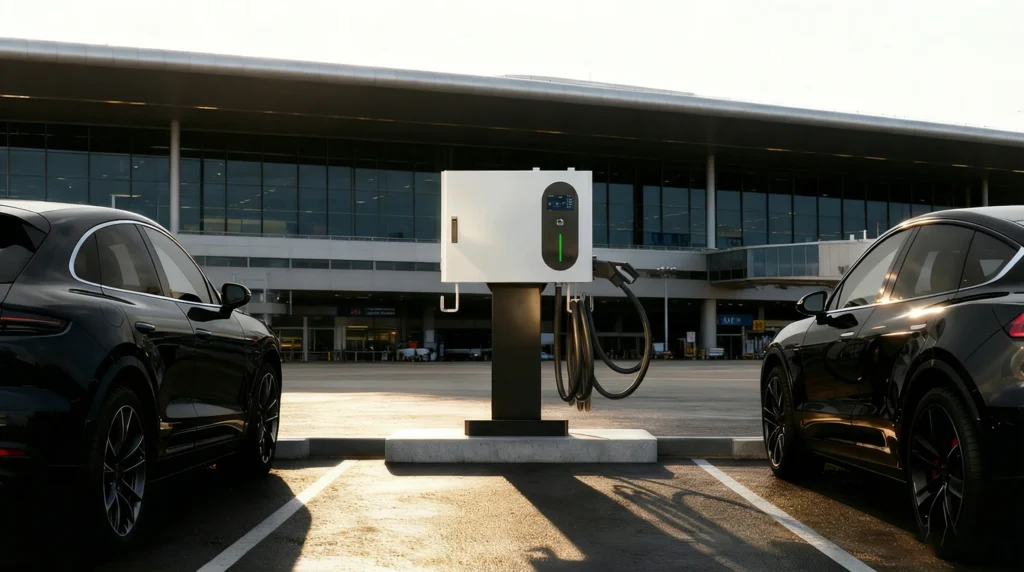
A Charge Point Operator (CPO) is any company or individual that installs, owns, and operates electric vehicle (EV) charging infrastructure. CPOs handle the full lifecycle of a charging site: hardware selection and procurement, installation management, grid connection, ongoing maintenance, customer billing, and network optimisation.
The CPO role sits at the centre of the EV ecosystem. Unlike drivers who use the chargers, or automakers who build the vehicles, CPOs build the physical infrastructure that makes EV adoption possible at scale. As of 2025, there are over 2.7 million public charging points globally, and that number is expected to exceed 14 million by 2030 (IEA Global EV Outlook, 2025).
Core Responsibilities of a CPO
A CPO’s day-to-day work spans four domains: infrastructure, operations, business management, and future-proofing.
Infrastructure responsibilities include site selection and due diligence, permitting and utility interconnection, hardware procurement and installation, and grid connection management.
Operations responsibilities include network uptime monitoring (target ≥ 98%), billing and payment processing, driver support and roaming access, and preventive and corrective maintenance.
Business responsibilities include pricing strategy and tariff management, revenue reporting and site P&L analysis, roaming partner agreements via OCPI, and grant and subsidy applications.
Future-proofing responsibilities include OCPP 2.0.1 and ISO 15118 migration planning, V2G and bidirectional charging readiness, cybersecurity compliance (IEC 62443), and preparation for Megawatt Charging System (MCS) infrastructure.
| Responsibility Area | Key Tasks |
|---|---|
| Infrastructure | Site selection & due diligence · Permitting & utility interconnection · Hardware procurement · Grid connection management |
| Operations | Network uptime monitoring (≥ 98%) · Billing & payment processing · Driver support & roaming access · Preventive & corrective maintenance |
| Business | Pricing strategy & tariff management · Site P&L reporting · OCPI roaming agreements · Grant & subsidy applications |
| Future-Proofing | OCPP 2.0.1 & ISO 15118 migration · V2G readiness · Cybersecurity compliance (IEC 62443) · MCS preparation |
Key Challenges Facing CPOs in 2026
Grid capacity delays are the most common obstacle in 2026, with utility interconnection queues of 6–24 months in many US and European markets. Early utility engagement and on-site battery storage (ESS) are the most effective mitigation strategies.
Fragmented payment standards — the coexistence of NACS, CCS1, CCS2, and CHAdeMO — force CPOs to stock multiple connector types or invest in dual-port hardware to serve all vehicles.
Low utilization at new sites remains the leading cause of CPO project failures. Sites below 15% daily utilization are cash-flow negative in most financial models. Introductory pricing, map platform listings (Google Maps, PlugShare, Apple Maps), and local business partnerships are the three highest-impact tactics for driving early utilization.
Hardware reliability variance separates profitable CPOs from struggling ones. Low-quality chargers can produce 20–40% unplanned downtime, wiping out revenue and damaging driver trust. A rigorous supplier evaluation process — including a 60–90 day pilot before bulk orders — is the most reliable protection.
Cybersecurity requirements are tightening. OCPP 2.0.1 mandates TLS 1.3 encryption, and IEC 62443 compliance is emerging as a procurement requirement in regulated markets. CPOs must ensure all new hardware meets these standards at the point of procurement, not after deployment.
| Challenge | Impact | Mitigation |
|---|---|---|
| Grid capacity delays | 6–24 month interconnection queues | Early utility engagement · On-site ESS as buffer |
| Fragmented connector standards | NACS / CCS1 / CCS2 / CHAdeMO coexistence | Dual-port DC hardware · OCPI roaming agreements |
| Low utilization at new sites | Below 15% = cash-flow negative | Introductory pricing · Map platform listings · Local partnerships |
| Hardware reliability variance | Poor quality = 20–40% unplanned downtime | Rigorous supplier evaluation · Pilot before bulk order |
| Cybersecurity requirements | OCPP 2.0.1 TLS 1.3 mandatory · IEC 62443 emerging | Hardware with certified cybersecurity compliance |
CPO vs EMSP vs MSP: Key Differences Explained
| Role | Full Name | Primary Responsibility | Revenue Source | Key Dependency |
|---|---|---|---|---|
| CPO | Charge Point Operator | Owns and operates physical charging hardware and site | Per-kWh or per-session charging fees | Hardware quality, grid capacity, uptime SLA |
| EMSP | e-Mobility Service Provider | Provides EV drivers with access and payment across networks | Subscription fees, roaming margins | OCPI roaming agreements with CPOs |
| MSP | Mobility Service Provider | Broader mobility services (may include fleet, ride-hail) | Service contracts, fleet management fees | API integrations, multi-modal data |
Many operators act as both CPO and EMSP simultaneously — operating their own network while also giving drivers branded access through their app. Separation becomes important when scaling beyond 100 sites or entering roaming partnerships across multiple countries.
H2: Step 1: Choosing Your CPO Business Model & Financial Path
CPO Business Models: Which Fits Your Operation?
| Model | Description | Capital Structure | Best For |
|---|---|---|---|
| Owner-Operator | CPO owns hardware, land, and operations end-to-end | High CAPEX, full control | Established operators targeting long-term ROI |
| Charging-as-a-Service (CaaS) | Third party installs and operates; host location receives revenue share | Low host CAPEX, managed by CPO | Retail, hospitality, parking asset owners |
| Fleet Depot Model | Captive charging for private fleet vehicles; not open to public | CAPEX by fleet owner, often eligible for incentives | Logistics, transit agencies, municipalities |
| White-Label CPO | Operate under another brand’s platform using third-party CSMS | Lower OPEX, faster market entry | New market entrants, franchisees |
| Concession / Government | Contracted by municipality or highway authority to operate public charging | Grant-funded or revenue-share concession | Highway corridors, NEVI-funded projects |
CPO Financial Modeling & ROI (Does Your Business Case Work?)
Understanding the unit economics of a charging site is essential before deployment. Public charging stations are not guaranteed to be profitable — site location, utilization rate, electricity cost, and pricing strategy drive the difference between a cash-generating asset and a stranded investment.
DC Fast Charging Site: Unit Economics Model
| Parameter | Conservative | Base Case | Optimistic |
|---|---|---|---|
| Charger power (kW) | 120 kW DC fast charger | ||
| Daily utilization rate | 10% | 20% | 35% |
| Daily energy dispensed (kWh) | 288 kWh | 576 kWh | 1,008 kWh |
| Revenue per kWh (CPO tariff) | $0.35 | $0.42 | $0.48 |
| Electricity cost per kWh | $0.14 | $0.12 | $0.10 |
| Gross margin per day | $60.48 | $172.80 | $383.04 |
| Annual gross revenue | $36,792 | $64,512 | $84,096 |
| Annual O&M + CSMS cost | $9,000 | $7,500 | $6,500 |
| Annual net operating income | $12,888 | $35,772 | $53,532 |
| Estimated payback (on $75K all-in cost) | 5.8 yr | 2.1 yr | 1.4 yr |
Grants and Incentives for CPOs: USA & Europe
Grant funding can reduce EV charging project CAPEX by 30–80%, transforming marginal projects into financially viable ones. The most important programs in 2026 are:
The NEVI Formula Program is the largest US federal funding source, covering up to 80% of eligible project costs. Requirements include a minimum 150 kW DC output, CCS1 or NACS connector support, location on or within one mile of an Interstate highway, and 97% uptime compliance. Applications are managed by individual state DOTs.
CALeVIP provides $4,000–$100,000 per charger for qualifying projects in California. Hardware must be CTEP-certified and publicly accessible. JointCharging DC fast chargers with UL 2202 and CTEP certification qualify for this program.
The EU Alternative Fuels Infrastructure Regulation (AFIR) is not a grant but a mandate that creates market demand. It requires DC fast charging every 60 km on the TEN-T core network by 2027, generating a structural build-out requirement across all EU member states.
OZEV grants in the United Kingdom cover up to £350 per socket for workplace and residential charging installations through OZEV-approved installers.
State-level programs including NYSERDA (New York) and MassEVIP (Massachusetts) offer $2,000–$75,000 per site for publicly accessible charging infrastructure. Eligibility requirements and application cycles vary by program.
| Program | Region | Coverage | Key Requirement |
|---|---|---|---|
| NEVI Formula Program | USA Federal | Up to 80% of project cost | ≥150 kW DC · CCS1/NACS · Interstate location · 97% uptime |
| CALeVIP | California, USA | $4,000–$100,000 per charger | CTEP-certified hardware · Public access |
| EU AFIR Regulation | European Union | Mandate (creates market demand) | DCFC every 60 km on TEN-T core by 2027 |
| OZEV Scheme | United Kingdom | Up to £350 per socket | OZEV-approved installer · Workplace or residential |
| NYSERDA / MassEVIP | New York & Massachusetts | $2,000–$75,000 per site | Public access · State-registered contractor |
Step 2: EV Charger Procurement & Supplier Selection (Choosing Your Hardware)
How to Evaluate EV Charger Suppliers: A 6-Dimension Model
The EV charger market has over 300 manufacturers globally as of 2025. Quality, delivery, and support capability vary dramatically. A rigorous evaluation process — not just price comparison — separates operators who scale profitably from those who get stuck firefighting hardware failures.
The 6-Dimension Supplier Evaluation Model
| Dimension | Weight | What to Evaluate | How to Verify |
|---|---|---|---|
| Product Quality & Reliability | 25% | Certifications, field failure rate, MTBF data, firmware maturity | Test reports, factory audit, request failure rate data from existing deployments |
| Delivery Capability | 20% | Production capacity, standard lead time, supply chain resilience | Factory audit, last-6-months OTD data, component sourcing strategy |
| Technical Support & SLA | 20% | Remote diagnostics capability, field service network, response time SLA | Service agreement terms, 24/7 support channel test, reference interviews |
| Pricing & Commercial Terms | 15% | Unit price at volume, payment terms, price escalation clauses | Competitive quotations, multi-year volume discount schedule |
| Software & Interoperability | 10% | OCPP 2.0.1 compliance, CSMS compatibility, API openness, OTA update support | Hubject/Keysight certification, platform demo with your CSMS |
| After-Sales & Warranty | 10% | Warranty duration (min 3 yr), spare parts availability, training program | Contract review, spare parts lead time test, customer reference checks |
✔ Supplier Green Flags
- OCPP 2.0.1 verified by Hubject or Keysight
- Provides field failure rate data (not just MTBF claims)
- Factory audit welcomed without prior notice
- References include CPOs with 50+ deployed units
- OTA firmware update confirmed via OCPP
- Spare parts available ex-stock in target market
⚠ Supplier Red Flags
- Certifications not traceable to named test lab
- Refuses factory audit or delays by 4+ weeks
- Cannot demonstrate live OCPP 1.6 / 2.0.1 connectivity
- Warranty excludes power modules or liquid cooling
- No reference customers with 12+ months operational data
- Minimum order quantity > 50 units without discussion
5-Step Supplier Evaluation Process
- Initial ScreeningShortlist 4–6 candidates based on target market certifications, power range coverage, and geographic presence. Eliminate any supplier who cannot provide traceable third-party certification documentation within 48 hours.
- Technical Specification AlignmentIssue a detailed RFI covering OCPP version, IP rating, supported connectors, OTA capability, and CSMS compatibility. Score responses on the 6-dimension model above. Minimum passing score: 70/100.
- Factory AuditVisit manufacturing lines, inspect incoming component QC, assembly process, and burn-in testing protocols. Key questions: What is the incoming QC rejection rate? How are power modules stress-tested pre-shipment? Joint Tech’s facility in Shenzhen operates ISO 9001-certified production lines with 48-hour burn-in testing on all DC units.
- Reference Customer InterviewsSpeak directly with 2–3 CPOs currently operating at scale (50+ units, 12+ months). Ask specifically about: actual uptime vs. SLA, firmware update experience, response time to critical failures, and whether they would deploy the same hardware again.
- Commercial Negotiation & Pilot OrderBefore committing to volume, negotiate a pilot order of 5–10 units deployed in real conditions for 60–90 days. Lock in volume pricing, spare parts terms, and escalation procedures. Establish KPIs: uptime > 98%, response to critical fault < 4 hours, OTA update success rate > 99%.
For a detailed framework for evaluating EV charger manufacturers before procurement, see our guide on how to choose an EV charger manufacturing partner.
If you are evaluating private label options alongside procurement, see our private label EV charger brand guide.
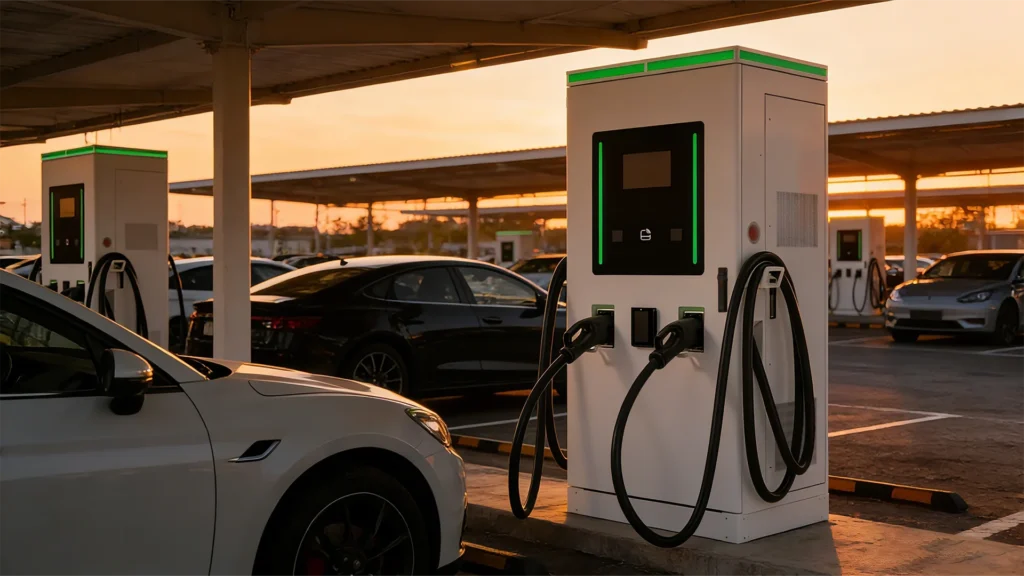
Hardware procurement is the single largest controllable cost in a CPO’s capital budget. Choosing the wrong charger for your use case — or prioritizing unit price over total cost of ownership — is the most common mistake operators make in their first deployment.
AC vs DC Chargers: Procurement Comparison
| Dimension | AC Level 2 Charger | DC Fast Charger (DCFC) |
|---|---|---|
| Power Range | 7 kW – 22 kW | 30 kW – 480 kW |
| Charge Time (60 kWh battery) | 3 – 9 hours (overnight or destination) | 8 min – 90 min (depending on power) |
| Hardware Unit Cost | $400 – $2,500 | $8,000 – $120,000+ |
| Grid Connection Requirement | Single-phase or 3-phase 32A typical | 3-phase, 100A – 800A; often requires transformer |
| Installation Cost (typical) | $500 – $3,000 | $20,000 – $140,000 (site-dependent) |
| Maintenance Cost / Year | Low — $100–$400 per unit | Medium-High — $1,500–$6,000 per unit |
| Target Dwell Time | > 2 hours (workplace, residential, destination) | 15 – 60 minutes (highway, fleet depot) |
| Best Applications | Offices, hotels, retail, apartments, airports | Highway corridors, fleet depots, petrol station replacement |
| Joint Models | EVM007, EVC10, EVL008 (EU) · EVM005, EVL007 (NA) | EVD003 (60–160 kW EU) · EVD100 (60–240 kW) |
Engineering Note — The 5 Procurement Decision Variables
Before issuing an RFQ, lock down these parameters:
1. Peak simultaneous demand (kW): Number of concurrent vehicles charging × average power draw. Use dynamic load management to reduce transformer sizing by 25–40%.
2. Connector standard: CCS2 + Type 2 for Europe; CCS1 / NACS for North America; GB/T for China. Dual-port DC units (e.g., EVD003) support CCS2 + GB/T simultaneously.
3. IP rating: Minimum IP54 for outdoor; IP55 recommended for coastal/humid environments.
4. OCPP compliance: OCPP 2.0.1 is mandatory for smart charging, demand response, and future V2G capability. Verify with Hubject or Keysight test certificates.
5. Warranty & MTBF: Require minimum 3-year comprehensive warranty. DC fast chargers should specify MTBF > 40,000 hours for liquid-cooled power modules.
Total Cost of Ownership (TCO): 5-Year Model
Evaluating EV chargers on hardware price alone is the most expensive mistake a CPO can make. A unit priced 20% cheaper that fails 3× more often, or lacks OCPP 2.0.1, costs 2–4× more over five years. Model TCO before issuing any purchase order.
| Cost Category | AC Level 2 (22 kW) — Per Unit | DC Fast Charger (120 kW) — Per Unit |
|---|---|---|
| Hardware purchase | $1,200 – $2,500 | $28,000 – $55,000 |
| Installation + civil works | $800 – $3,000 | $25,000 – $80,000 |
| Grid connection / transformer | $500 – $2,000 | $10,000 – $60,000 |
| CSMS subscription (5 yr) | $500 – $2,000 | $2,500 – $8,000 |
| Maintenance & repair (5 yr) | $500 – $2,000 | $7,500 – $25,000 |
| 5-Year TCO (estimated) | $3,500 – $11,500 | $73,000 – $228,000 |
Pro Tip — Procurement Negotiation
For orders of 10+ DC fast chargers, always negotiate a spare parts kit (power modules, cable assemblies, displays) into the contract. Sourcing parts post-warranty from a Chinese manufacturer typically adds 6–12 weeks lead time and 40–60% price premium vs. pre-negotiated rates. A $2,000 parts kit can save $15,000+ in lost charging revenue per downtime incident.
For AC chargers at scale (100+ units), request a unit-level remote firmware update capability verified via OCPP 2.0.1 — this eliminates truck rolls for software issues and cuts support costs by 30–40% per year.
Certifications Checklist by Target Market
| Market | AC Charger | DC Fast Charger | Connector Standard |
|---|---|---|---|
| European Union | CE, IEC 61851-1, EN 61439 | CE, IEC 61851-23, TÜV Rheinland | Type 2 (AC) · CCS2 (DC) |
| United States | UL 2594, ETL, ENERGY STAR, FCC, CTEP | UL 2202, ETL, FCC, CALeVIP (California) | SAE J1772 / NACS (AC) · CCS1 / NACS (DC) |
| Canada | CSA C22.2, UL 2594 | CSA C22.2, UL 2202 | SAE J1772 (AC) · CCS1 / NACS (DC) |
| China | GB/T 18487, CQC | GB/T 18487, GB/T 20234 | GB/T (AC & DC) |
| Middle East / SEA | CE + local import approval | CE + local import approval | Type 2 or CCS2 (varies) |
Step 3: The Technology Backbone: OCPP, CSMS & Interoperability
CSMS Selection: What to Look For by Network Scale
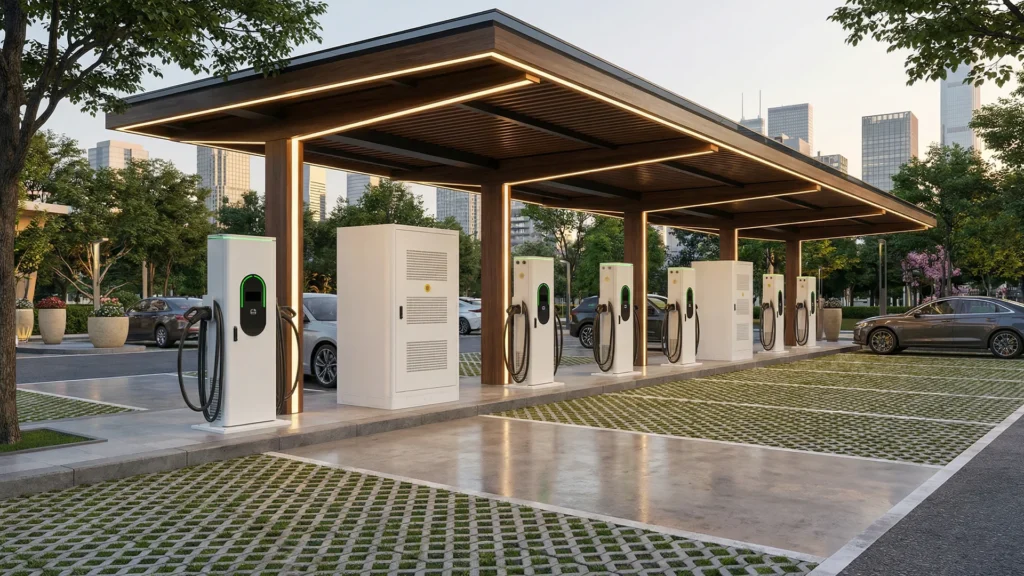
A Charging Station Management System (CSMS) is the software backbone of every CPO operation. It handles real-time device monitoring, billing, roaming, load management, and reporting across your entire network. Choosing the wrong CSMS — or underspecifying its capabilities — creates lock-in that costs six figures to escape.
CSMS Core Feature Requirements by Network Scale
| Module | Capability Required | 1–50 Sites | 50–500 Sites | 500+ Sites |
|---|---|---|---|---|
| Device Monitoring | Real-time status, fault alerts, remote reset | Required | Required | Required |
| Billing & Payment | Time-of-use, flat-rate, membership, Stripe/PayPal integration | Required | Required | Required |
| OCPI Roaming | Inter-network roaming (Hubject, eMIP, OCPI 2.2.1) | Optional | Required | Required |
| Smart Load Management | Dynamic power sharing, demand response, grid signal integration | Recommended | Required | Required |
| Revenue Analytics | Site P&L, utilization trends, session data export | Recommended | Required | Required |
| AI/Dynamic Pricing | Demand-based pricing, revenue forecasting, competitor benchmarking | Optional | Recommended | Required |
| Open API / Webhooks | Integration with ERP, fleet platforms, energy management systems | Optional | Recommended | Required |

OCPI vs. OCPP: What Is the Difference?
CPOs frequently confuse these two protocols. They serve completely different purposes, and both are required for a fully interoperable charging network.
OCPP controls the communication between your physical charger hardware and your back-end Charging Station Management System (CSMS). It handles remote start and stop commands, OTA firmware updates, smart charging profiles, and real-time fault reporting. Without OCPP, your chargers cannot be remotely managed.
OCPI (Open Charge Point Interface) controls communication between different CPO networks and platforms. It enables roaming — so that a driver registered on Network A can authenticate and pay on Network B. OCPI handles cross-network driver authentication, roaming session billing, real-time tariff sharing, and network availability data exchange.
The simplest way to remember the difference: OCPP keeps your chargers talking to your platform. OCPI keeps your platform talking to other networks. A CPO operating across multiple countries or seeking roaming revenue needs both protocols implemented correctly.
Key roaming hubs that use OCPI include Hubject (intercharge network), Gireve (Europe), and eMIP. Registering on these platforms after go-live is a standard step in the CPO launch process.
| OCPP | OCPI | |
|---|---|---|
| Full Name | Open Charge Point Protocol | Open Charge Point Interface |
| Connects | Charger hardware ↔ CSMS | CSMS ↔ CSMS (between networks) |
| Purpose | Manage your own chargers remotely | Enable roaming across different networks |
| Key Functions | Remote start/stop · OTA firmware · Smart charging · Fault reporting | Driver authentication · Roaming billing · Tariff sharing · Availability data |
| Version to Use | OCPP 2.0.1 | OCPI 2.2.1 |
| Example Platforms | Your CSMS (Virta, Driivz, etc.) | Hubject · Gireve · eMIP |
| Required for CPO? | Always | If roaming-enabled |
OCPP 1.6J vs OCPP 2.0.1: Full Feature Comparison
The Open Charge Point Protocol (OCPP) is the communication standard between EV charging hardware and the back-end management system (CSMS). Developed by the Open Charge Alliance (OCA), OCPP is the single most important interoperability standard a CPO must specify in hardware procurement. Buying non-OCPP-compliant hardware locks you into a single vendor stack — eliminating your ability to switch CSMS platforms or integrate roaming partners.
“OCPP 2.0.1 is not an upgrade — it’s a different generation of protocol. CPOs still running OCPP 1.6 will find themselves unable to participate in demand response programs, V2G pilots, or ISO 15118 Plug & Charge networks within the next 2–3 years.”— Open Charge Alliance Technical Committee, Annual Report 2025
— Open Charge Alliance Technical Committee, Annual Report 2025
| Feature | OCPP 1.6J | OCPP 2.0.1 |
|---|---|---|
| Message count | ~25 message types | ~200+ message types (15× more) |
| Smart charging profiles | Basic (ChargingProfile) | Advanced — ISO 15118, dynamic profiles |
| Cybersecurity | TLS 1.2 optional | TLS 1.3 mandatory, certificate management |
| Device management | Limited (remote start/stop, config) | Full OTA firmware, component monitoring |
| ISO 15118 / Plug & Charge | Not supported | Supported (PnC out of the box) |
| V2G / V2H readiness | Not supported | Architecture supports V2G messaging |
| Transaction data granularity | Per-session only | Per-kWh, per-period, per-connector |
| Backward compatibility | — | Can connect to OCPP 1.6 CSMS with bridge |
| Joint support | All models: EVD003, EVM005, EVC10, etc. | EVD003, EVM005 NA (certified Hubject + Keysight) |
Engineering Note — OCPP 2.0.1 Implementation Checklist
Verify before accepting hardware delivery:
1. TLS 1.3 handshake: Confirm the charger rejects TLS 1.2 connections. Test usingopenssl s_client -tls1_2— connection should fail.
2. OTA firmware update: Initiate a firmware update via CSMS and confirm success within 15 minutes with rollback on failure. Verify the FirmwareStatusNotification message is received.
3. Smart charging: Push aChargingProfilewith a 5-kW limit and confirm the charger respects it within < 30 seconds. Log theSetChargingProfileresponse code.
4. Plug & Charge (ISO 15118): If PnC is required, verify the charger holds a valid V2G root certificate and completes the 15118-2 TLS handshake with a test vehicle or simulator.
5. MTBF after 30-day soak: Deploy 1–2 units in live conditions for 30 days before bulk acceptance. Record session count, failure count, and firmware version stability.
Step 4: Deep Dive: Fleet Depot Charging Design
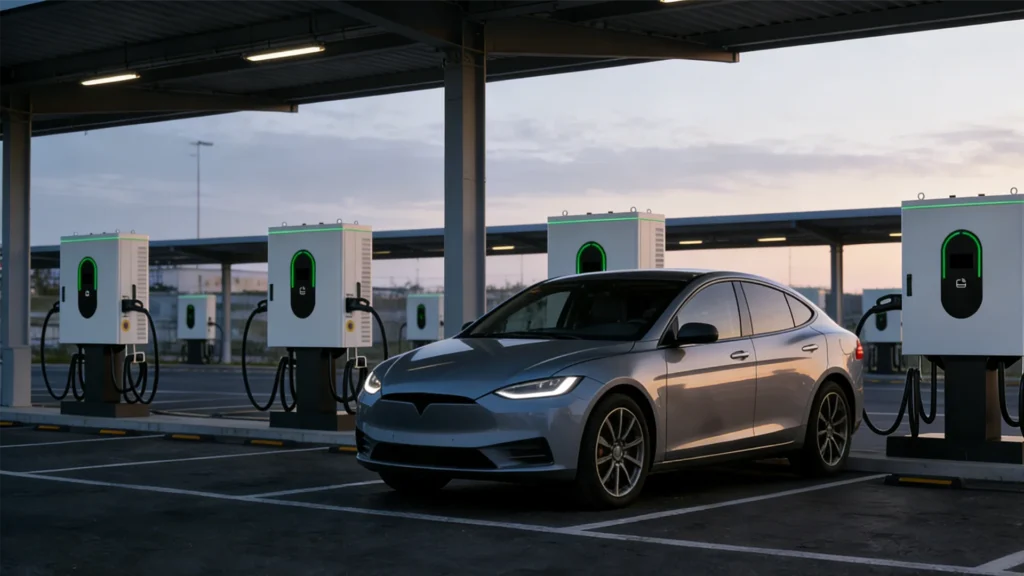
Fleet depot charging is the fastest-growing CPO segment in 2025–2026, driven by electrification mandates for commercial vehicles in the EU and US. A well-designed depot charging system avoids peak demand charges (which can represent 30–50% of total electricity cost) and ensures vehicles are always charged for their operational schedule.
Fleet Depot Charger Sizing: Rule-of-Thumb Calculator
| Fleet Type | Recommended Charger | Charging Scenario | Charger-to-Vehicle Ratio | Load Management |
|---|---|---|---|---|
| Light commercial vans | AC 22 kW (Type 2) | Overnight, 8–10 hrs | 1 charger : 2–3 vehicles | Dynamic power sharing |
| Urban delivery trucks | DC 60–120 kW | Opportunity charging, 30–60 min | 1 charger : 4–6 vehicles | Scheduled smart charging |
| Transit buses | DC 120–240 kW | Overnight + mid-day top-up | 1 charger : 3–5 vehicles | V2G-ready grid integration |
| Long-haul trucks | DC 350–480 kW (MCS) | Break charging, 30–45 min | 1 charger : 8–12 vehicles | Peak shaving + ESS buffer |
| Ride-hail / taxi fleet | DC 60–150 kW | Rotation charging, 20–40 min | 1 charger : 6–10 vehicles | Queue management system |
Pro Tip — Fleet Depot Power Management
For a 100-vehicle fleet, dynamic load management (DLM) reduces peak grid demand by 20–35% compared to unmanaged charging — translating to $15,000–$40,000/year in lower demand charges at typical US commercial electricity rates. JointCharging’s EVD100 series supports integrated DLM via OCPP 2.0.1 smart charging profiles, enabling up to 480 kW distributed across multiple charge points without a transformer upgrade.
Step 5: From Plan to Operation: Launching & Optimizing Your Network
The 60-Day CPO Launch Checklist
Most CPO launch failures happen in the final 30 days — not from hardware issues, but from missed utility coordination, incomplete CSMS configuration, or skipped roaming platform registration. The following checklist covers the critical steps from pre-construction to post-launch review.
Days -60 to -30 (Pre-Construction): File utility interconnection application immediately — this is the longest lead-time item in any charging project. Submit all local permits. Provision your CSMS account and configure site settings. Place hardware orders with confirmed delivery dates. Confirm installer availability and mobilization schedule.
Days -30 to -10 (Installation): Complete civil works including trenching, conduit, and electrical panel upgrades. Install chargers and verify physical connections. Establish OCPP connection between each charger and your CSMS. Confirm TLS 1.3 handshake is active. Run end-to-end payment test with a test card and a live vehicle.
Days -10 to -3 (Commissioning): Initiate an OTA firmware update via CSMS and verify success with rollback capability. Test a smart charging profile at a reduced power limit (e.g., 5 kW) and confirm charger compliance within 30 seconds. Register your network on roaming platforms (Hubject, Gireve, or eMIP as applicable). Submit listings to Google Maps, Apple Maps, PlugShare, and ChargePoint if applicable.
Day 0 (Go-Live): Activate introductory pricing (10–15% below local competitors for the first 60–90 days). Confirm driver support contact is active and staffed. Run a final walkthrough of all charger status displays and CSMS dashboards.
Day +30 (Post-Launch Review): Pull utilization report by charger and by time slot. Review fault log for recurring error codes. Adjust pricing based on actual demand patterns. Set preventive maintenance schedule (quarterly inspection recommended for DC fast chargers, semi-annual for AC Level 2).
| Phase | Timeline | Key Tasks | Owner |
|---|---|---|---|
| Pre-Construction | Day -60 to -30 | File utility interconnection · Submit permits · Provision CSMS · Place hardware orders | CPO + EPC |
| Installation | Day -30 to -10 | Civil works complete · Chargers installed · OCPP connection verified · TLS 1.3 confirmed | EPC + CPO Tech |
| Commissioning | Day -10 to -3 | OTA firmware test · Smart charging profile test · Payment end-to-end test · Roaming registration | CPO Tech |
| Go-Live | Day 0 | Listed on Google Maps / PlugShare · Introductory pricing active · Driver support active | CPO Ops |
| Post-Launch Review | Day +30 | Utilization report · Fault log review · Pricing adjustment · Maintenance schedule set | CPO Ops |
EV Charging Pricing Strategies: Which Model Fits Your Network?
Pricing strategy is the most underestimated lever in CPO profitability. The right model depends on your site type, dwell time, CSMS capability, and local regulatory environment.
Per-kWh pricing is the gold standard for DC fast charging. Drivers pay per unit of energy delivered, which is transparent, fair, and maximizes revenue at high-utilization sites. This model requires CTEP or MID-certified metering in regulated markets.
Per-minute pricing charges drivers for time connected rather than energy delivered. It is used in markets where per-kWh billing is restricted by law (several US states historically required this), but is becoming less common as regulations modernize.
Flat session fees charge a fixed price per charging session regardless of energy or time. This model is simple to administer and works well for low-traffic AC Level 2 sites, but leaves revenue on the table at high-utilization locations.
Dynamic pricing uses AI to adjust rates in real time based on demand, time of day, local electricity cost, and competitor pricing. Industry data shows dynamic pricing delivers 10–30% higher revenue per site compared to flat-rate pricing. This model requires a CSMS with dynamic tariff capability and OCPP 2.0.1 hardware support.
Membership and subscription models offer drivers a monthly fee in exchange for discounted per-kWh rates. This creates predictable recurring revenue and improves driver loyalty. It works particularly well for fleet accounts, workplace charging, and high-frequency urban commuter sites.
| Pricing Model | How It Works | Best For | Revenue Potential |
|---|---|---|---|
| Per-kWh | Pay per unit of energy delivered | DC fast charging · High-volume sites | ⭐⭐⭐⭐⭐ Highest |
| Per-minute | Pay for time connected | Markets where per-kWh billing is restricted | ⭐⭐⭐ Medium |
| Flat session fee | Fixed price per session | Low-traffic AC Level 2 sites | ⭐⭐ Lower |
| Dynamic pricing | AI adjusts rates by demand, time, grid cost | High-traffic DC sites with CSMS support | ⭐⭐⭐⭐⭐ +10–30% vs flat rate |
| Membership / subscription | Monthly fee for discounted per-kWh rate | Fleets · Workplace · Loyalty programs | ⭐⭐⭐⭐ Predictable recurring revenue |
2026 Trends CPOs Cannot Ignore
1. V2G and Bidirectional Charging Becomes Commercially Viable
Vehicle-to-Grid (V2G) allows EVs to export power back to the grid or building during peak demand. Nissan, Volkswagen, Hyundai, and Ford now offer V2G-capable vehicles, and grid operators in the UK, Netherlands, and California are running commercial V2G programs. CPOs with OCPP 2.0.1 hardware and ISO 15118-20 support are positioned to participate in V2G revenue streams of $500–$1,500/vehicle/year by 2027.
2. Solar + Storage + Charging Integration (PV+ESS+EVSE)
Pairing on-site solar generation with battery energy storage reduces grid dependency, eliminates demand charges, and enables off-grid charging in locations with limited grid capacity. JointCharging’s integrated ESS + EVSE solutions are designed for this architecture, allowing CPOs to generate 30–60% of charging energy from on-site renewables.
3. AI-Powered Operations Replace Manual Monitoring
Operators with 20+ sites cannot efficiently monitor in real time without AI assistance. Predictive maintenance models trained on session data can identify charger failure risk 48–72 hours before it occurs, reducing unplanned downtime by 40–60%. Dynamic pricing algorithms analyzing local traffic, competitor rates, and historical demand patterns add 10–30% to per-site revenue vs. flat-rate pricing.
Frequently Asked Questions
References & Sources
- IEA — Global EV Outlook 2025
- Open Charge Alliance — OCPP 2.0.1 Protocol Specification
- FHWA — National Electric Vehicle Infrastructure (NEVI) Program
- Rocky Mountain Institute — EV Charging Economics: Pathways to Profitable Public Charging, 2024
- BloombergNEF — Electric Vehicle Charging Infrastructure Outlook, 2025
- EU Regulation (EU) 2023/1804 — Alternative Fuels Infrastructure Regulation (AFIR)
- Wood Mackenzie — EV Charging Infrastructure Cost Benchmark, 2025
- Virta — Dynamic Pricing Impact Analysis, Network Data Report 2024
- Hubject — intercharge Network OCPP Certification Registry
- MarketsandMarkets — EV Charging Infrastructure Market — Global Forecast to 2030, 2025
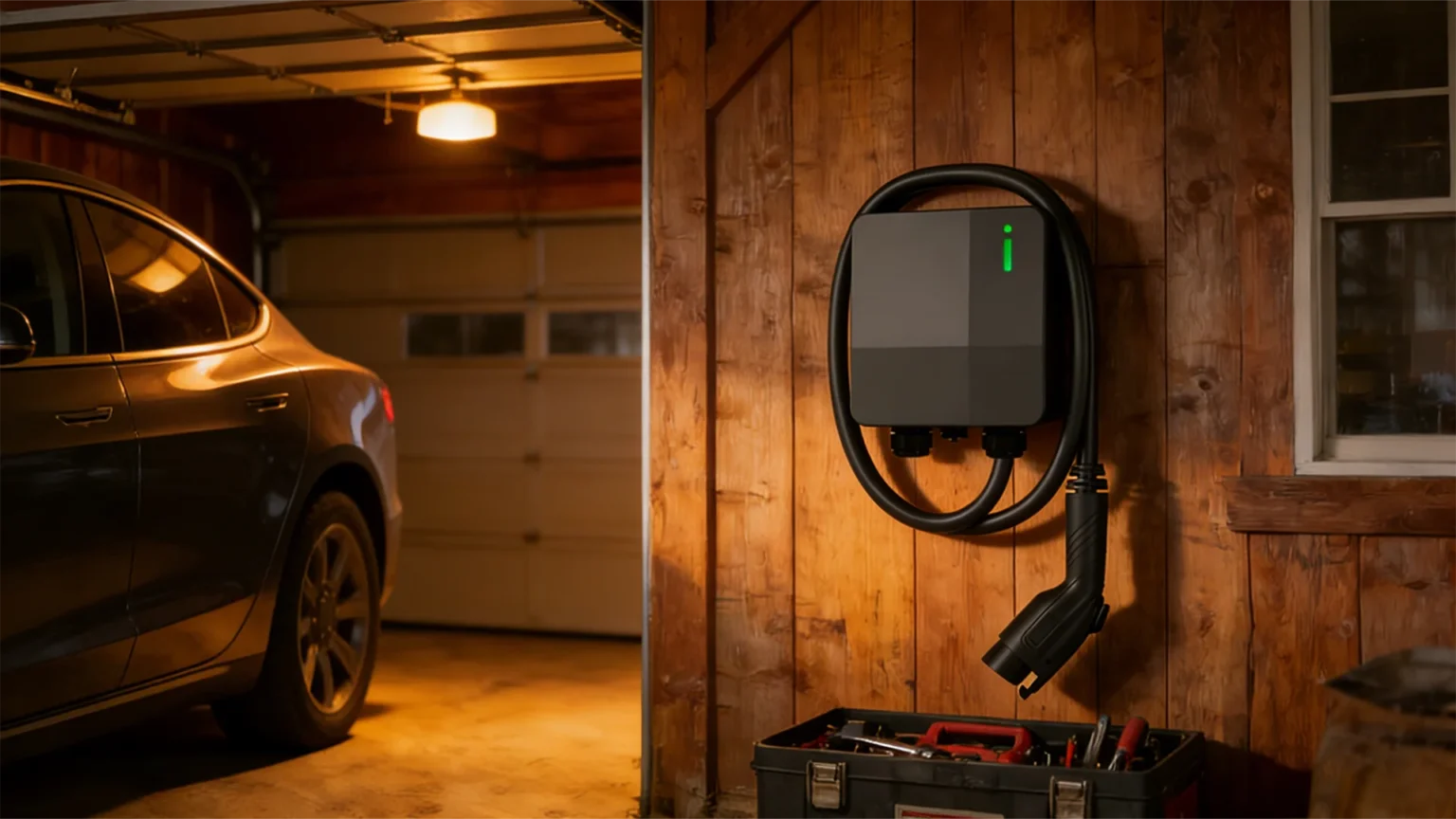
Redefining AC Charging — Making Smart Chargers Truly Smart
The core truth: Most AC chargers on the market cannot read your EV’s actual battery…
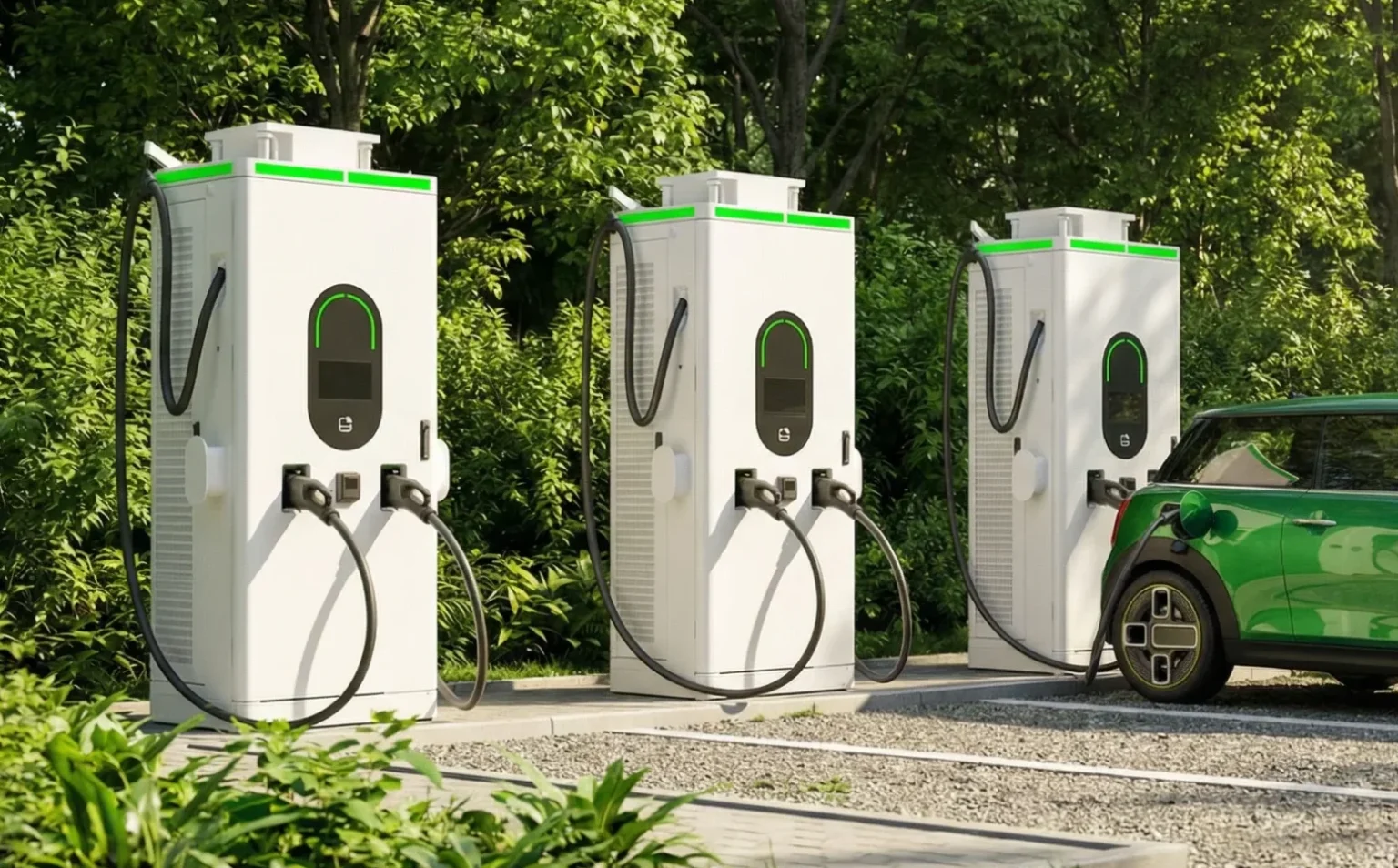
MyFirstEV Is Coming: Which EV Chargers Will the Market Need?
Last updated: July 15, 2026 California’s MyFirstEV programme is expected to lower the upfront cost…
What Is MyFirstEV? California’s New EV Rebate Explained
Last updated: 15 July 2026 MyFirstEV is California’s new point-of-sale rebate programme for residents buying…
What Is CALeVIP? California’s 2026–2027 DC Fast Charging Incentives Explained
Last updated: July 15, 2026 California is providing $55.2 million in new funding for publicly…
Is There Still Room for a New Private Label EV Charger Brand?
The honest version of that question sounds like this: the EV charger market is obviously growing…
Private Label EV Charger Launch: Complete Checklist
Most private label EV charger brands spend months getting the product right — and maybe…
